Monday, 25 September 2023

Business Planning an MVNO, Travel SIM or Roaming IMSI product - free Webinar

 We are kicking off the end of 2023 with some free Webinars looking at the key issues facing the doing of Mobile Wholesale vs. the talking, some of them with live eSIMs for delegates (depending on location) so get enrolled today:

Business Plan & Business Planning and MVNO, MVNE, Travel SIM / Mobile Roaming Product

This is an online webinar, enroll at Eventbrite


Monday, 31 October 2022

What is the P-GW or GGSN and why do more IoT, MVNO and Enterprises have their own?

The Packet Gateway or P-GW, previously GGSN in 3G architecture was something generally in a full MVNE or MVNO or IoT player would have, with resellers mostly using their host’s APN and Data Node. This is changing as data is becoming a key differentiator in many areas, however interestingly becoming less important in others, with many players choosing the simplicity of host Carrier APNs (mobile data settings).


Tuesday, 24 May 2022

What is Cloud MVNO, Cloud MVNE, Cloud cellular IoT and why is it important, what its it and what is it not

In an MVNO event not too long ago, the CEO of an MVNE that is no longer in business presented and said that their platform was fully cloud enabled... he then corrected this statement to say, "actually its not cloud at all; we just say that as its a buzzword and it sells". This for me sums up a lot of the tech industry, however that is not the topic of today's post - its about why cloud is important not just for your bottom line but also for the planet and sustainability, as cloud uses unto 100x less electricity and the same again in data centre space... now do I have your attention? Now where were we, ah yes, what is cloud and what it isn't: please like and subscribe if you want to be notified of more of these as I work through the glossary


Wednesday, 18 May 2022

New Short videos and commentary on what has changed for HSS and P-GW in 2022

You wait years for a video and then two come along at once. Like and subscribe as there are more coming weekly / daily


Tuesday, 15 December 2020

MVNO Gold Rule #5 - Launch your MVNO with a single goal and stick with it, best one is Loyalty imo

So we have a new post and this is the first post which is based around a video, or a vlog, if you will, as opposed to some of the videos now being done adding to and updating some of the key posts. This one is a key one arising from a conversation with a customer, which hits on a question we have been analysing following going through CRM to see what makes an MVNO successful. Most of the key ones have had loyalty as the key. There are other factors to consider, especially as explained again and again here in these pages: the biggest enemy of the MVNO is not failure; it's never getting to market, and one of the key mistakes which can be made is choosing your systems around for example revenue generation and low cost, when you actual focus is customer loyalty!

So you can see from this diagram, from the very beginning an mvno needs to work out if it's going to be:


  1.  premium or discount or 

  2. whether it's doing an MVNO either for the revenue as a new revenue stream or it's doing it for the loyalty and 


Obviously these can change over time, and they do -  that's life, right? However life is a lot easier if you know what you're doing, or at least try to plan what you are doing in the beginning and you build your platform and your solution, and you choose your partners around this.


So an example being the two arrows that we have off to the left if you're going to be a discount operator then you may choose a customer service that's low cost which which is kind of at odds with you being premium but it may also impacts your ability to use this product as a revenue service because people probably will see this low-cost and then you won't necessarily contract happy customers and even as a loyalty product because this customer service that you choose may be at odds with how your customers want to be supported with regards to the rest of your business.


Then other things to think around that are for example the branding the marketing the pricing and your channels, so again, what I've seen happening in many MVNOs is that a big established company will decide: “right, I am going to be an mvno I will employ xy&z salesperson from mobile to make sure my mvno is a success as I have heard the worse thing in the world is a failed MVNO, right?” 


Wrong! if you are setting that up from a pure loyalty perspective then establishing the mvno in all the 3rd party channels is not a good idea because


a) it's a very expensive way to sell and 

b) it's going to place your product where all the competitors are and so 

c) you've just wasted a lot of money and commission on a channel, people and processes  that is at odds with the whole concept of your loyalty.

d) your cost of acquisition has just doubled or tripled the RoI


To give you an example, a supermarket mvno in the beginning made most of its sales via its own online channel on a Monday and Tuesday... This is not a coincidence, this is because people were shopping in that supermarket during the weekend and looked at their phones in their supermarket, and the ones that did not buy directly in the store decided to have a little look online to make sure it was a good deal, or just waste their time as customers have every right to do when making a purchase, and then went direct to the customer’s online store. 


Why would you then enable this large amount of customers, who have been into your store, then they have been onto your website, all in your colours, your brand, your flavour of how things are done... to then give them the option to further delay the purchase and go to one of the indirect channels where you are going to pay commission and there is a risk that you will lose that customer in the process, and the experience that customer experience is outside of your control and indeed the customer service post service is likely to be inferior, or at the very least different: It just does not make sense, however that is the situation I find myself in time and time again when launching an MVNO within a large organisation. 


Just because you don't have experience in mobile does not mean that as a successful business, having launched many different products and services in many different horizontals and verticals you should not ask, question, double question and then triple question: “why am I doing this in mobile?”:  Does it make sense or is it just because I've employed somebody who was in mobile and that's the way they did it for a product and a service that is in a completely different space on this diagram above.


At the end of the day, if its a brand play, mobile is all about brand loyalty...


These are all points that I've put here on this blog, but I covered differently in the vlog, sorry video so to get the full low down, experience The Full Monty the full hoo-ha the 360 the total immersive experience you need to check out the video as well as read this and you need to read this again probably after the video and then like comment subscribe hit the notification button if you liked it anyone more content like this … thanks!


Tuesday, 12 February 2019

MVNO Gold #4 Ship Daily

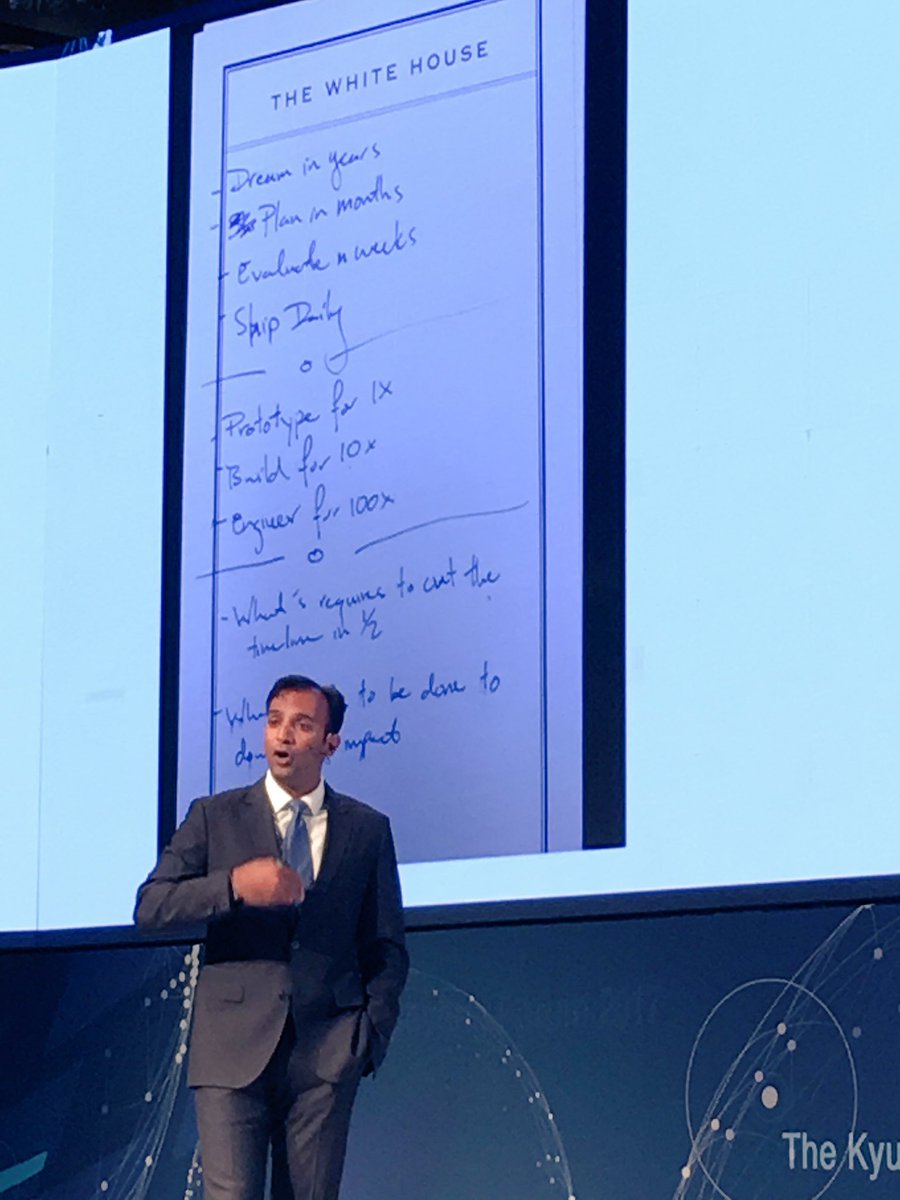
Being true to the Minimum Viable Product in MVNO; shipping daily, Evaluating weekly, planning monthly


This Image from a former Chief Data Scientist of the white house came up in my Linkedin stream and serves pretty much as a catalyst to an article that has been in draft for a while on this blog, so here goes as it is very, very relevant to the MVNO model, and here is a link to the post plus another I could find while checking superficially that it was not fake news ... https://goo.gl/images/v7neVw
These ideals are ones for MVNOs to very much live by
Let's go through the first four bullets in reverse order.

Ship Daily: The importance of the mantra: Ship Daily in MVNO, MVNE, MVNA, MVNx

Possibly the most important bullet on this list is ship daily, and its the one I struggled most with in my early days: I could never understand why investors and potential customers were so wrapped up in a handful of growing sales, but now 20+ years on I get it and cannot understand why some customers so overlook getting a handful of sales and growing it, especially those looking for investment.. Shipping daily, even if its just the handful of SIMs like in the next bullets, means you are getting feedback, you are learning customer patterns, you are leaning how to optimise your service, your time and your processes and what is possible based on practise, not theory. In theory these two are the same, but as we all know in practice they are very, very different. If we then jump to below, a generic me too non differentiated product will not grow, it will stop and start.

In the end customers are also like investors: its very easy to sell a service to someone who's friend or colleague already has it. It's very hard to make your first sale without "daily shipments".

Evaluate weekly: the importance of evaluating constantly and MVNO, MVNE, MVNA or MVNx

If all the daily shipments want a refund, it's easier to manage, adapt and refine with daily shipments than suddenly having hundreds or thousands of refund requests. Weekly evaluation is not always easy: you need a real-time platform (realtime billing, realtime CMS, realtime reporting) to do it properly, but at its most superficial level you need to be editing your products page weekly, looking at the data, looking at your CRM (salesforce etc) or just a sales spreadsheet and looking back at what worked and what needed improvement. Honestly of course! And this is important; people who shy away from this lack either the confidence or experience to be honest and handle failure maturely and learn from it: without this no MVNO will continue to grow or scale.

Starting and keeping true to the MVP is key to success in mobile wholesale; If you are not evaluating weekly what is being shipped daily what you have is a minimum, if you are lucky its a product, but it's invariably not a viable product.

Plan MVNOs in Months

Many MVNOs and MVNEs are truly woeful at planning and spend their time drifting between daily emergencies, fads, whims and red herrings.  Alternatively, others have the worlds biggest project plan and spend their days chasing tasks rather than the yearly dream or the daily sales: the key is i the middle and resides in Monthly planning; what is this and next months target, are we on track (from daily sales and weekly evaluations... ) and most important the dependencies. You have to be able to run before you can walk: if you have not sold 1, 10, 100 or 1,000 SIMs; is that huge deal of 1,000, 10,000 or 100,000 SIMs really going to happen? The answer is "highly unlikely". Even if that big deal does happen, how likely is it to fall apart i the process if you have not cut your teeth on 1, 10, 100 sales: the answer is "highly likely".

Get a spreadsheet, make a list, number them, list any dependencies, and most importantly who is going to do each task and by when.

Its always refreshing to get an agenda like this when someone is speaking

Dream MVNO in years

Do we need to say Dream in years? Sadly we do; even shipping daily, evaluating weekly and planning monthly - mobile businesses take years, if you don't stick to the above mantra mobile businesses invariably never make it as nobody has decades!

I will cover the other parts in an upcoming post / add here so don't forget to follow however you prefer on twitter, linkedin, facebook etc on the top right social icons.

Tuesday, 26 June 2018

MVNO in a box and cloud MVNO / MVNE - What do they mean

Cloud means many things to many people

Cloud means many things to many people, but as far as virtual mobile is concerned, it really means virtualisation, stuff that was designed to be on multiple machines, put in a single environment for operational and service effectiveness. The reason or a single virtual environment. The reason for this is that you cannot put all of the elements needed for a full MVNE in the cloud yet (like install it on AWS) so you have to create your own, which is not as easy as it sounds: many people just do not have the license or rights to sell on a complete system to a 3rd party. In short, most MVNEs are like an internet cafe, with, hopefully, licences to let their customer use computers with the software they bought on the, but they do not have a right to resell all of that software for a separate resale or resale of a resale.
Cloud and in-a-box is only a real benefit if all services are integrated on a single Single Virtual Environment 

When is cloud really a benefit as opposed to just marketing gumpf?

Just like before setting up Conecto, I worked on one of the biggest companies and best know brands in the world global MVNE strategy, not only did we have this issue, but furthermore; Not one MVNE passed our operational or financial due diligence, so we had to go with suppliers who let us deploy as we wished and build our own. My previous client, before Conecto was built, had to go with the least bad MVNE at the time, which was far from ideal.
So now we have the Cloud issue dealt with, lets get to what “in a box” means!
That means everything on a single virtual environment, not just OSS, BSS; reporting, OTA... the lot!

What does in-a-box really mean?

Conecto has spent 3 years, taking so called off the shelf "in a box”, some of them already cloud or part cloud, services, making them fully cloud, NFV, SDN capable... however we found the world of MVNE is not so in a box and we needed to put more in the box than we bargained for... like a whole new SBC, MSC, SMSC and GGSN, as well as other services like OTA needed completely re-integrating to make it work.

When is in-a-box really a benefit as opposed to marketing gumpf?

What most people mean when they say “in a box” is that they in fact have a collection of boxes prepackaged and selected for you in another box, all of which, again, cause huge operational and other issues.

In short, there is no point having a bunch of connected “clouds”, single virtual environments” or “boxes in a box”, as APIs, connectivity, and even security patching and regression, along with and other changes and even basic debugging mean that achieving over 99% uptime is impossible. 
In short, true cloud benefits are achieved by taking ALL the elements of a fully running, INTEGRATED service and putting them on one virtual machine and networking service. Only then can you:
  • Resource flexibility; instead of having to physically take a machine down, etc, you can allocate more resource remotely, 
  • Apply levels of security and operational processes above and beyond the donor services
  • Multiply connectivity for example to 8 or 16 SMSCs vs only 2
  • Assure that data stays within a single network environment when being reported, stored and processed.
  • Lastly but not least(ly); achieve 99.9xxx uptime when donors only promise 97% in some cases.

How far can the box stretch?

So next time someone tries to sell you “in a box” and / or a cloud MVNE, make sure you scratch below the surface and see what it really means, as in the last 4 years of RFPs and migrations of customers from pretty much every major MVNE player, we can only conclude that we are the only MVNE that has this, or at least has customers using and taking advantage of the operational flexibility and other benefits that true cloud and in a box offers.
There is no point having a selection of boxes in a box, as it does not give the operational efficiency to do all this!

Promotional Advert for our sponsor and only truly cloud in-a-box mvne I am aware of in the sense of offering true benefits to MVNOs and their customers as outlined above: true operational efficiency and flexibility.

Tuesday, 16 January 2018

MVNO Gold Rule #3 - Have a Hard Stop Launch Date

Updated: Have a Hard Launch Date, as early as an MVP possible and Stick to it - MVNO Gold Rules

It used to be a lot easier in the past; with full MVNOs the test window with the MNO could close and take weeks or months to access again, to name but one. However in the new cloud based world its all so flexible and easy that its easy to just keep slipping another month, but I have noticed that with this the number of failed MVNO, that is the ones that never make it to market, not those that launch and fail, is on the up. 


Failure to launch at the earliest is possibly one of the biggest risks to your MVNO every launching or being successful
The problem of missing launch dates is manifold:

The first biggest problem is the seasonal issues you can encounter. While below I explain why seasonality most effects the MNOs and insufficiently differentiated MVNOs, you are still making it harder on yourself, will have smaller uptake, will have a lower success rate, higher customer acquisition cost, have impacts from staff being away (summer, Christmas, etc), find it difficult to react to a sales spike (try asking for more SIMs over Christmas!) have staffing issues, etc, etc, etc.

The second being that its very easy for “golden goose” or “launchaphobia” to set in. Its a simple human nature that is even more exaggerated in business where a normally laissez-faire person can be become a risk-averse freak and a risk-averse freak in their personal life can become and agoraphobic in business: the more you leave something the bigger an obstacle it becomes, and the more prepared you need to be... Face it, most people are not just afraid of change, they are petrified of it

The third being that you leave your product open to corporate sabotage. I say this in a nice way, as it should be called corporate terrorism: at best this is the person who is most risk averse in the team and was probably the least been the decision, starts getting cold feet and seeding doubt. At worst you have these risks:

  1. The corporate terrorist, neigh-sayer, also known as corporate pimp. These are the guys who know all the pitfalls but never have any answers that do not involve burying / over spending / delaying, procrastinating in the name of... put them on QA or something, but not product development.
  2. "Not invented here merchant" - great people to manage operations, terrible in anything customer facing - let them know when its done and have dotted line: on the RACI they should be consulted / informed
  3. The neigh-sayer - send them back to whatever they did that was useful, but MVNO is not for them, as per point 2 above.
  4. “Specialist consultant” These are usually lone wolves, for a reason, nobody else can stand working for them, they have done a few MVNOs in specific areas and now want to branch out to do everything but seriously lack the knowledge. Easily found out by asking how much repeat business they have from MVNOs they have worked on / launched.
  5. The 11th hour dark (trojan) horse. These are usually internal and are very dangerous, like a dormant, deadly virus residing deep in spinal nerves waiting to cripple the business at the last minute spewing out all the concerns that a responsible adult would have brought up ages ago, but with a veneer that is taken as seriously as the manifestation of a format virus usually is. They shut up and put up, but in reality bottle up until the last moment they come in with lines like "as I was not properly consulted", "as per our gated procedure", "has business change been consulted" ... invite them to take their amazing, unique expertise and apply it to BAU, or if they insist on working on something new, suggest they are rated here and invite them to set-up their own business :)
  6. Gaining fat. Literally, like the last bird to fly, the harder it will be as you will be fatter, less fit and juicier to predators. When you fail to launch you invariably get fatter: more people, more resources, etc. and it just gets harder from there, and the juicier and more helpless you become to predators.
  7. The person who does not get the simple difference between beta and production, early adopter and mass market, new product vs established, and tells you how hard it will be to market, support, etc, etc.
I could go on, but have just put the main ones here... Seriously, stop reading this and launch already!

Seasonatily - Launch Dates are not Easy 

Conventional MVNO wisdom dictates that you should not launch on these dates, there are reasons for this and reasons against, however it is more important to launch than not, and these seasonal rules apply more to a fully fledged mass market product, so below I go into how to mitigate these issues in next section.

  • Over the summer as people are away and nobody will see or care for your marketing
  • In the run up to Chirstmas as the MNOs and Handset Manufacturers are spending their big bucks and customers become bessoted with “Free” handset deals.
  • In January as nobody buys a mobile then

It’s better to Launch off Season than Delay

While conventional mobile marketing wisdom, which of course by de facto became MVNO marketing wisdom, dictated that you cannot sell mobile in the following periods
  • Over the summer as people are away and nobody will see or care for your marketing (spot the old school non digital thinking here). You can get around this by launching a roaming offer / summer offer, using marketing tools like "reach on the beach" by Facebook, etc, etc.
  • In the run up to Christmas as the MNOs and Handset Manufacturers are spending their big bucks and customers become besotted with “Free” handset deals. (This assumes the old model where the vast majority of handsets and service was bought from an MNO or an MNO reseller). There are lot's of people who plan to do this, but then the reality of credit checks and undersigning someone else's phone kicks in and they are back looking back at the MVNOs in a key purchase period: be there!
  • In January as nobody buys a mobile then (err, nobody buys from an MNO who has squeezed every drop out of its marketing for the previous two months!) The Christmas phones have a 7 to 30 day return period... and lots get returned... again be there!

The BIG Caveat

Do not launch any old rubbish; there needs to be a USP that you deliver. Just one USP, and delivered. The biggest pitfalls here are
  1.  Not 2 or 3 wishy washy USPs rolled into one, what we call a "pot pourri USP" or multiple hard USPs that have nothing to do with each other "Frankenstein USP" or "Jekyll and Hyde USP". 
  2. Some light "MVNO wash" rebrand of an MNO service, like free social networks (post 2013 when all the MNOs copied the early adopter MVNOs who did this)
  3. Some rebrand of an old MVNO, or some MVNE that has only ever done one type of product / no differentiated services. MVNEs are not all alike, ask your MVNE for references and ask your self do these products really differentiate from the market? if not, you are talking to the wrong MNO / MVNE and failure is only a launch to administration period away!
I cover some of these in the synopsis of one of the 2015 workshop at the Nice Global MVNO conference. However I have added another slide here below that focusses on the single USP for launch.
If your MVNO product does not have a SINGLE, DELIVERABLE, USP then try harder. And no that USP is not low cost!
If you want to run this or another full MVNO workshop or masterclass tailored to your team please use the contact on the right. 

So when do I launch

In sum, while its better to launch, if you can off season, if you are ready in Christmas or June, 1st, get on with it, if your pre christmas launch slips and it means launching 27th December or 2nd January - do it... (you will be amazed how a slip never happens again!). At the end of the day, an MVNO is a retail business, and lives on margin, growth, sales feedback and data, word of mouth, recommendations, etc... all of which start at day 1.


Saturday, 2 December 2017

MVNO Gold Rule #2 - Own The Customer, Sensibly and cost effectively

MVNO HLR Own the Customer

In the early days of the MVNO a prevailing thought was that an MVNO needed to own the Home Location Register (HLR) in order to won the customer, which in a sense is true, however there are much more important ways of owning the customer rather than just the HLR, some of which actually challenges the ownership of the HLR, however these all need taking in context.

Customer touch points

Owning the customer is much more than an HLR, or a database - its owning the experience of all customer touch points
The most important customer ownership points come from actually owning the customer relationship, that means charging, self-care, as well as the usual sales and marketing.

Owning the customer means owning the customer experience across the whole user journey:


  1. Marketing, customer acquisition and brand (everybody gets that, mostly)
  2. Self-care: is your brand empowering, low-cost or care centric? Is mobile your first or a complimentary brand, is mobile your core business or a loss leader, all these points will influence how you want to care for the customer.
  3. HLR, GGSN, DPI, PCRF, IVR, if you can own these, not for the sake of it, you can differentiate a product more, but they are not essential and do not differentiate a service by itself
  4. Customer care

Self-care owned by MVNO

Some of the early legacy platforms had rebrandable self-care platforms for the MVNO-in-a-box oxymoron that circulated: The very essence of an MVNO is to differentiate itself from the MNO, but also other MVNOs, so the very concept of an MVNO in a box is a misnomer and dead end for anything other than a small scale trial. To own the customer you need to at least own the first level touch points along the value chain after the initially obvious sales and marketing, and they begin in the self care. No matter what you skimp on as an MVNO, you need to own this experience.

So many early MVNOs tried this, in fact even MNOs did this in the early days when online sales were below 1% of sales, MNOs outsourced the whole online sales to third parties, but these times were different, they were pre phishing and the internet was full of pages with active gifs galore, in today's internet world, it is just not acceptable to be transported off to another site to look after a customer, in a very generic way. 

Also, while an MVNO may be able to launch with a "patchware" selfceare service, as the product evolves this approach will either become a change request hell or mean the product cannot evolve as it grows from early adopter, to follow sales to mass market.

In short, caring for the customer is part of owning the customer and that experience cannot be "out of the box" if you want any hope of doing it properly.

Payment gateways need to be owned by the MVNO

Another point some MVNOs try to skimp on or MVNEs try to over supply is with is payment gateways. an MNO or MVNE should never be taking payments on behalf of a brand. These days of multiple start-ups providing payment gateways the MVNO needs to integrate the legacy (old bank run gateways) the new (start-up payment processors) and the in betweens like Paypal (many people sell their old handsets on ebay), as well as be integrating with Apple and Android payments for realtime notifications and updates of bundles, top-ups, and other billing related events.

Handset and SIM Configuration

Some OTA APN services are so bad they take up as much as 50% of customer service times, this is not good. This means 50% of ARPU disappearing in a way that does not own, but rather disown the customer.

SIMs are also a key touch point. There is no point spending half your customer acquisition cost on a glossy SIM and SIM pack (the latter of which goes straight in the bin) if every time someone looks at their phone it says something other than who you are, and the SIM menu is some generic afterthought.

Customer care

Virgin Mobile UK was voted best UK Network Operator for 13 years in a row by Mobile Choice Magazine, while its mostly then identical host, One 2 One, then T-Mobile, etc. was mostly voted the worst! One 2 One's service was so bad that another UK brand refused to launch with them and the MNO moniker was one 2 no-one. Virgin knew that by owning customer service (and selfcare) they could change this, and they did, by also keeping its MVNO simple so when you called their well trained staff could answer your question in one call with one agent.

Owning customer care is also the only way to control rising costs to serve, which can kill MVNOs if left unchecked as they scale.

Apple, owning the customer vs owning the customer via the HLR

When doing workshops with MVNOs, the key is to make people think proactively about issues, as running an MVNO, or even an MVNE is hard; mobile is complex and issues will arise daily that on some occasions can seem like mountains to surpass that threaten the very existence of the MVNO in question. If an MVNE team does do not learn to help its MVNO, and more importantly the MVNO does not learn to see the wood for the trees, then it simply will not survive.

So yes, a simple way to own the customer is to own the HLR, and if the service is not sufficiently differentiated, then owning the HLR does effectively own the customer, however the out of the box challenge goes like this: At first, Apple's iPhone was only sold by one mobile network in each country. In the US it was AT&T, in the UK it was O2 Telefonica, etc. Before the other networks in each country started also selling iPhones, these operators had millions and millions of customers. You therefore have to ask yourself - if AT&T or O2 had lost the iPhone exclusive, how many of those customers would have stayed and kept their SIM with another phone on that network??? The answer is none, literally. Apple does not own an HLR, or even a basic reseller model, what it owns is the touch points like selfceare...

DPI, IVR, etc

While these services can help you differentiate, if you just use them to give away free WhatsApp or use an off the shelf IVR menu tree that has loads of options customers really do not need nor wish to waste their time listening to, then what is the point. These really should be owned by the right customer, and most probably in house and not part of the MVNE as they need to be so focussed at your user journey they really do not "MVNO in a box" at all well, as bad an idea that is for other services as it is.
cost to serve

If you need any more convincing, why does Apple not let resellers play with the software? Why does Samsung insist on playing with Android and adding its own look and feel?

Friday, 17 March 2017

MVNO Gold rule #1 - Keep it Simple

MVNO Gold Rule #1 - Keep it Simple

This is the most ignored rule of all and one of the biggest culprit of failed MVNOs, and by that I mean not the launched MVNOs that fail, but moreover the huge amount that never make it to launch due to over complication, which in turn creates delays and cost which moreover lead to uncertainty and uncontrolled risk in the eyes of many - the killer of all things new and venturous!


But that is not possible, you see, when someone is tasked with creating a mobile pricing model, they revert into what I have become to call the Jekyll-Hyde Frankenstein... a freakish monster of all things mobile rolled into one, with every good idea they have ever seen in mobile across the world, ever, in enterprise, consumer, travel, low-end, high-end; you name it; there is a tariff for it and a model behind it!
The first bicycle - as designed by the average MVNO and MVNO consultant as their first launch product *sigh*. Source

The concept is simple - create a first simple MVNO tariff that will


  1. Make your MVNO competitors think you are going nowhere as an MVNO
  2. An MVNO tariff that will only be attractive to your core Niche and not be at all attractive to the masses of freeloaders, fraudsters, etc. If you cannot charge a premium for at least 1,000 or a few thousand early adopter users you do not have a Niche product that will sell and need to go back to the drawing board.
  3. Be attractive to your core MVNO audience and your limited amount of first MVNO SIMs and bandwidth to respond to real customer feedback
  4. Listen to customers and follow your MVNO brand with private, below the line offers that your competitors do not see but your real early adopter customers can promote to your next "me too" customers
  5. Keep MVNO prices within a sensible range to create trust and avoid anything that needs a footnote like Free this*, unlimited other ¹, etc.
  6. Don't be lazy and just do "free social networks MVNO" or "free VoIP app MVNO" which was OK in 2010 to 2015, or if it is part of a wider campaign but now is weak and infinitely copiable.
  7. Leave your MVNO super tariffs for when you are mass market MVNO
This is difficult to do, the MVNO MVP is elusive, but the easiest way to do it is to start early and get whatever you have working first with a USP that is not easy to copy out to market.

MVNO Survey Report Knect365 (Informa)

MVNO Survey Report now out

I do hope you filled out the MVNO survey, as of course I did, and now the results are out and make for quite an interesting read. 
One of the various Infographics from the report, largely reflecting customer feedback
Largely reflecting what the movers and shakers among both my Next Generation MVNE and MVNO Consultancy customers are doing and reporting from around the world, namely:
  • While the largest investment for 2017 is technology (50%) followed by customer services (25%), this effort is being focussed on M2M/IoT and enablers such as VoIP and WiFi (and deducing from this 4G also) with only 12% seeing for example eSIM having and impact on their business in 2017. Whilst we do have eSIM opportunities with customers that go back 10 to 15 years as an emerging technology, by far the biggest growth is in the lead up to 5G MVNO and IoT and M2M across the MVNE and MVNO consultancy business.
  • The biggest growth for 2017 will come from Asia, Africa and Europe and to some extent the US, with Latam, the golden promise of 2016 and 2016 that never delivered, still not delivering significant growth in 2017 either at only 5%

Thursday, 16 March 2017

eSIM opportunity for MVNOs, MVNEs and manufacturers as per Dallas MVNO conference


The eSIM is a hotly debated trend and was the subject of the two panels I spoke on in the Dallas 2016 Wholesale Connectivity Convention where in addition to the usual blurb I was keen to get actual dates from panellists on when they thought the technology would become mainstream. I warned I would write these dates down and blog about them, but have stopped short of saying who said which date in order to protect the innocent!
eSIMs were an integral part of 
There were two panels,  The Panel on Global connectivity with eSIM as a sub topic (morning) with Gigsky, my old client Tim previously of Microsoft, now with Transatel and the omnipresent Dave from Aspider.
Speaking with Gigsky, Transatel and Aspider on eSIM as part of how global connectivity can drive growth
In the afternoon session we had another old client of mine, Federico Homberg from Deutsche Telecom, Steffen Frenck from the SIMalliance, David Buhan from Gemalto and Tony Wyant from Gigsky again. The key outcome for me is that I asked all the panel and some of the audience to give me a date when they believed that eSIM would make mass market (and yes I did emphasise that I was taking notes), when it would appear as a viable option in Niches (alongside normal SIMs) and two in between options emerged: mainstream in niches, such as smart watches; and "in every new car".
Mainstream eSIMs are still a way away, however for certain specialist players / trusted parties there are niche opportunities
The writing on the wall is that that mass market eSIM is a good few years away / not coming anytime soon and the reasons for this discussed and offered were:

Supporting eSIM is complex and requires trust from vendors

Many MVNEs and MVNOs saying they are going into eSIM, that they can support eSIM, etc, etc. However they generally stumble on the following.

Financials

eSIM means distribution is "easy" (although its not necessarily the case, see "managing eSIM is complex" below), however the reality is that the business is very unpredictable;
  1.  essentially people can take an eSIM for a month, a week, a day or even just a few hours in an airport, and then not return for a few months if ever, yet someone is stuck with paying costs for that user on an HLR, CRM, billing system, etc. most of which are billed somewhere along the line on the fact that they will be used for a good few months, not a day here or there.
  2. forecasting is impossible
  3. USP / customer ownership - there is very little to leverage other than cost
  4. loyalty - there is none in many cases!

Managing eSIM is complex

The biggest issue I have come across to date is the concept that many have whereby they say "we can support eSIM", when in fact is what they mean is "we have tested eSIM".  This gap between what you can do for 1, 10, 100 or even low 1,000s of SIMs vs. what you can scale is the bane of the mobile industry and one of the key limiting factors of MVNOs and MVNEs growing, and often sadly also the demise of MVNOs and MVNEs as it prohibits them hitting critical mass. The bad news is that it only gets worse when you add the scale and complexity of eSIM.

This is a bit like saying, "I can send an email, sending emails works from our systems" which just about anybody can say, however this is very, very different from being able to manage a busy inbox efficiently, and even further away from having an email sending system and email management system installed, integrated and working for a specific application! does not mean I have an email campaign management system!

The most recent case was a couple of years ago and eSIM was at the core of the service proposition; At the 11th hour the need for a third party eSIM platform and integration was required. In hindsight it all became clear to me, as said MVNE did not even have simple OTA ability in house, so managing sSIM was a whole level of pain higher. 

eSIM requires trust and relationship management

the eSIM relationship is one that often requires deep sharing of what many MNOs, MVNOs and OEMs consider highly confidential data that very few people in the business, let alone outside of the business are allowed access to. Mismanagement of this type of data to the wrong party or a party who cannot manage security credibly is asking for that OEMs customers to have their private pictures shared or their phones calls disclosed, and so again, there is a litmus test here. Having spent last two years integrating a whole suite of MVNE services to make the most complete MVNE service we were amazed how many services are not even using basic security, like SSL for portal and API access for example, how is an OEM going to trust a service like this with deep access to their OS, for example? 

MNOs have no need or requirement to support eSIM in short to medium term

The biggest issue however will be MNO resistance, as they really have no need for eSIM in the mainstream in the timescales that are above:
  • Handsets are getting bigger
  • The device ownership timescales are getting longer
  • MNOs have invested in significant retail and distribution presence

The upside to eSIM opportunity in the immediate term

The upside for MVNOs and MVNEs that can pass the tests above, is that the emerging opportunities are often too niche or too International/complex for the MNOs (e.g. multi IMSI). 

Friday, 10 February 2017

MVNO Event Series Interview Growth Areas, Challenges for MVNO in 2017


Q: Tell us about yourself and your position at Conecto?


I am Christian Borrman, CEO of Conecto, Conecto is an MVNE in the UK and US, originally also in Mexico. Conecto provide flexible and scalable solutions for MVNOs notice of all sizes.

Q: what is the current state of the MVNO Market?


The MVNO market has hit a bit of a plateau in there are lots of people trying to do things however the lot of people who have found the present solutions are either not scalable or that they're too limiting, or if they started in one sense (i.e MVNE vs. MVNA)  then they may have to throw that all away and start again (if they grow) or they have to risk and start very big and probably never gets that size they expected.

Conecto provide a solution that lets them start very small and grow as big as they want or need , and if at some point the MVNO wants to buy out of that solution the MVNO can (and still stay with the same APIs, CRM, and other systems). We have seen that a lot of players are actually looking at our Conecto model is a way to go forward with  and MVNO model they have been investigating for a while as well as existing MVNOs they have just not been able to scale, and  move forward where the MVNO was not moving forward before.  

Another big issue has been a lot of consultation with the network operators which has effectively just made it a lot more difficult to get a wholesale agreement that people (MVNOs) necessarily want. This consolidation is a period that has lasted now for about 2 years and I think we're coming out of that finally,  and so this should make things a lot easier (with no MVNO competition a competitive wholesale deal is very difficult) and so we should be seeing a lot of next generation MVNEs and MVNOs taking advantage of cloud MVNE flexibility, and taking advantage of the renewed appetite of wholesale operators for MVNOs (post consolidation or no consolidation) and as such we should see a renewed growth in MVNOs in the coming months and years.


Q: Where do you see new opportunities in the MVNO market?


Well I am probably not the best person to ask because we spent a lot of time in Mexico where in 2015/2016 that was where there was supposed to be the next big growth area (and we acted upon) which it wasn't for various reasons that we won't go into... What we have seen on a practical note that there is a lot of untapped opportunity in the US and in the UK and some extent in Europe and that is then moving in the next year or so, as I see it, to Africa and the Middle East being the next big growth areas that we certainly have on our radar and (is evident in terms of opportunities) on our CRM system, and for me are upcoming opportunities.

Q: In what region do you see the biggest growth for MVNO?


I still think there is a lot nascent growth in Europe and the US, there is just a lot of people who do not have solutions to their problems or the solutions they want to their problems from the existing players (...and many of these players have left the market) and we have seen situations such as Audi buying an (going to the extent of buying an) MVNE (a company just does not buy a provider / solution they are happy with in normal market conditions). We are see a lot of big players

Airlines and and car manufacturers either creating their own Solutions, buying their own Solutions or coming to companies like Conecto with Next Generation Solutions and there's a lot of untapped growth there which may or may not come to fruition in the next year or so.  In a slightly more mid to longer term I think Africa and the Middle East are growth areas, and the LATAM area can grow again but there are serious issues in terms of competition and regulation that need to be overcome.


Q: Why should MVNOs attend our events?


As I have said a few times I think it's the key area where people can come together, twice a year for the International Events and at least once a year for the Regional events. It's very difficult to meet people from all around the world, and sometimes it's difficult to even arrange meetings (with key partners, let alone) see everybody in one place. For such a niche market you need to have an excuse and a place to go, and this is the place where I get to meet everybody in the industry in one place and have back to back meetings without distractions of needing to solve this problem all that problem which of the end of the day, mobile as a complex business and there's always things delaying and putting meetings off so, if you have an excuse to congregate somewhere X times a year, then that is the (one time) when you can get a lot achieved.

Come and meet Conecto at the Acropolis Nice, 24-27 April 2017

Friday, 22 April 2016

MVNO World Congress 2015 Pre Conference Workshop Part 2 - MVNO Data

2015 PRE CONFERENCE WORKSHOP - MVNO Data

Following up on the post 2016 MVNO World Congress  on the 2015 pre conference workshop, we have part 2, following Part 1 Mobile Marketing
Data is hard for MVNOs to sell effectively, as there are many hurdles, but good loyalty and revenue rewards those that do.
The biggest hurdle for any new MVNO is overcoming the same issue of the previous section on marketing: its the schizophrenic frankenstein approach. 
Your data package will vary if you are pre-pay, postpay or with an MVNO on MNO
The reality is that data bundles vary substantially if you are with an MNO, MVNO, prepaid or postpaid, and as such an MVNO data should vary. In reality, most pre-pay and MVNO customer s I have access to data for, use a lot less data than their postpaid counterparts, and there is a reason for this: if you are being charged for more data than you use, you will tend to learn to "abuse" data, whereas is you pay for what you use you tend to be more frugal.
Don't do it!

The is also a strange dichotomy whereby while mobile data requirements are going up on the one hand, wifi offload, wifi coverage, wifi speed and availability is also going up and giving way to "snacking" whereby frugal, light and moderate use of pay for what you use data at a premium price, can still be cheaper than "supersize" bundles that are throttled at some point anyway.

The second big issue for MVNOs is data configuration. We have been doing OTA APN data configuration specifically for MVNOs longer than anybody at Virtuser and know the pitfalls, especially when i comes to user experience, as we started out enabling apps for Nokia with their PR and Marketing agencies in 2006, and it was critical that the user experience was right.
Get the user experience for data for MVNOs wrong and it will be a disaster no matter what the bundle, package or need!
You need to get data working in as few clicks possible, and with a uniform as possible experience across all devices to a) keep customers, and b) minimise failures, but most of all c) minimise customer support; which is both a cost and a terrible customer experience in one.
Too many steps to configure data means too many points for failure, terrible customer experience and an unhappy customer
Above is the experience of the same ex MVNO with one service, and below with another... guess which one is ours and which is more effective :)
Simple data configuration is key to an MVNO
Apart from a bit of a plug of a service we spent 5 years developing to get right, the key is to remember than MNOs have this done automatically and so you, and an MVNO, are already starting with a disadvantage in terms of pain of adoption: keep it simple and get it right...

On top of this I would add the element of looking at wifi to complement your business, as the MNOs have done as well. In the long run it will keep your MNO happy, as:
  1.  you do not want to have the discussion with your MNO at the monthly operational meeting where X% of the MNO's network data hoggers are on your MVNO: just trust me on this one!
  2. keep the network, service and price for people prepared to pay for what they use and you are able to allow them to get what they pay for, which keeps the pressure on cost down.
  3. nothing is more "cannibalising" to an MNO than points 1. and 2. above!
  4. data can have the highest utilisation of any bundles if you get the product / price / positioning wrong
I have not covered all the points of the workshop, but a quick resume of other points are
  1. Have an app for data usage, as well as other usage, which shows actual usage and value and gains trust
  2. Never, ever, offer a throttled service: if you need an asterisk and footnotes, don't sell it
  3. Make the rest of the customer experience easy. An MNO has unlimited bundles that need limiting. There are however a lot of customers out there that are happy to pay for the data they use, as long as it is not throttled, and MVNOs can often end up with some very lucrative high end users.
A final addition is the one of eSIMs, which was presented in the 2016 MVNO World Conference the day I chaired this year. eSIMs are in many devices now, such as iPads and soon rumoured iPhones, and a host of devices coming out soon. You will also need to be able to SIM OTA, which you can do with advanced MVNEs such as the one I built  but not many do; which means yet another service to integrate, pay for, another relationship to managed, etc. etc.


Wednesday, 23 March 2016

MVNO World Congress Pre Conference Workshop 2015

2015 Pre Conference Workshop - MVNO Marketing

I had the pleasure of running the MVNO world Congress pre-conference workshop in the 2015 #MVNOIS, so as we run up to the 2016 MVNO event in Amsterdam its probably time to upload some of the slides to give you an overview and share some of the experience.
2015 #MVNOIS Pre Conference Workshop 
The workshop was in three parts, this is the first part that focussed on MVNO Marketing, which in my now 16 year of doing MVNOs, is the hardest hurdle after the MNO agreement and MVNE plus all the other service provision contracts selection. The second part focusses on MVNO Data.
2015 #MVNOIS Pre Conference Workshop topics covered
I Will cover the MVNO Data services, MVNO International Roaming, and MVNO Multi-IMSI points in the next few days / weeks running up to the 2016 Conference, as these areas are key, if not the key way an MVNO can differentiate itself from other MVNOs and moreover its host MNO and grow scalability in a competitive mobile market.
An Activity every MVNO should do almost daily!
The first task was to name 3 Big MVNOs that the audience think market themselves well. This is important on many levels.

  • Firstly, if there are none of them in your market you need to ask some serious questions about why and make sure you are not repeating any of their mistakes! 
  • Secondly, it is where MVNOs most differentiate themselves at conception, but most easily compromise on in launch... and to be honest, from there they often never launch and/or never become successful. 
To be a successful MVNO you need to be able to easily access all the needed data on your customers, process this and send targeted below the line packages at them. The key here is that they are below the line, competitors do not see them, customers love and recommend them, but your competitors do not copy them. I want you to think about this as you go through the slides, and I add my 3 top MVNOs further down.
This is sadly where a lot of marketing time is wasted by MVNOs - above the line copy cat price competition - why?
Most MVNOs develop what I cal a bi-polar frankenstein approach to Marketing.

  • Bi-Polar as they flit between being slightly cheaper that their most expensive competition, to undercutting the cheapest offer from the biggest MNO in an instant. 
  • Frankenstein as the first marketing and even product set, is usually stolen from every MVNO that has ever existed in 5 countries, over 3 MVNO models in 6 different niches... and the result is, well usually awful! 
The way MVNOs market is by sending bespoke offers to their customers that will never be on a slide, as they arrive via SMS and the offer is only available to those customers, or other customers of the MVNO. To do this you need ready and quick access to data:

  • who do they call? 
  • what time do they call?
  • what handsets IMEI/MSISDN database are they using?
  • what locations are calling from frequenting?
  • what locations are they running out of credit?
  • where are they topping up?
  • how much and how often are they topping up?
  • what top-up channels are they using?
  • what type of data are they using, where and how fast?
All this is in the CDRs, GGSN and HLR, and needs to be available to the OCS needs to be fully integrated with this, as well as a tool to bulk SMS, and report who has what SMS, as while you will be marketing daily, its not good to market the same customers more than a few times per month for obvious reasons.
"If you cannot name 3 MVNOs from your territory that do this well, its most likely that they do not have access to this data, and if you do not, then you will not be a leader either" 
MVNOs are a Sales and Marketing organisation. The best ones have great BI and change pricing flexibility 
OK I jumped a few slides here on refining product and marketing, however this slide leads on well from above as well as: When an MVNO examines its subscriber acquisition costs (SAC), ARPU and Churn, it very quickly sees that MVNO led customer to customer and MVNO to customer led marketing obtain customers cheapest and keep them the longest. It is important to have a mix of SAC but these need to be kept down to grow successfully as an MVNO.
Choose and adapt from successful MVNOs, but avoid "Bi-Polar / Frankenstein" campaigns! 
Draw on what has worked and what is (see previous slide) is in budget. EE recently did a huge above the line campaign with Kevin Bacon, which is beyond any MVNO marketing budget, however its OM4G and 4GEE twitter coverage was cheap and genius and well within MVNO budgets.
Back to the three MVNOs from the activity above, go through these points.
In my workshop I then went through the above key points for three MVNOs I think market themselves well. My examples were deliberately different: Lyca Mobile, Virgin Mobile and Tesco Mobile; the key being that while they are very different MVNOs in very different segments, theirs USPs focus on points that the MNO and other MVNOS find hard to copy, they deliver what they promise without extensive T&Cs, and typically their most successful packages are no where near as cheap, nor anywhere near as expensive, as the cheapest / most expensive MNO offerings of the "Bi-Polar" approach to pricing.
My most copied slide! The MVNO must evolve its marketing to launch successfully and then grow
Which brings me to the last slide of the Marketing section, and my most copied slide. Every MVNO that has been successful has evolved through these stages, many that have failed have failed to adapt, either because.

  • They just did not evolve. Some ethnic MVNOs started with a multi-language USP, but as customers learn their host country language the product needs to evolve, or the countries expand.
  • They could not evolve technically as they were tied too much into their host
  • They could not evolve operationally - if the reporting is manual spreadsheets... you are not going to market successfully beyond early adopters.
When launching an MVNO you can get by with the basic tools that an MVNE and the host MNO gives you, as long as this includes: CDRs, IMEI, HLR location of LUs, all transactions, collated top-up info, SMS marketing tools and reports, reconciliation, GGSN logs, etc. These need to be accompanied with the ability to update data settings OTA, edit the SPN OTA, change tariffs real-time, etc, etc. and usually require another 10-20 services to be sourced and integrated to move beyond early adopters.  These are the keys missing from failed MVNOs or underperforming MVNOs.


I hope you find these slides useful and informative. Feel free to paste these slides into your own presentations, as many do, but of course please do the basic common courtesy of quoting where the content is from if you do change the appearance and/or remove any logos, watermarks, etc.